Understand the schoolwork.
Support for the child’s own CBSE, ICSE or state-board learning. Find the missing concept, work through it and build understanding—not just finish the page.
 Mother Skool / A NanoSkool initiative
Small groups. Personal attention.
Every child deserves someone who notices how they learn.
Mother Skool brings schoolwork support, creative exploration and practical life capabilities into small, home-based learning groups led by trained Mother-Educators.
Programme in development. Enquire about plans for your area.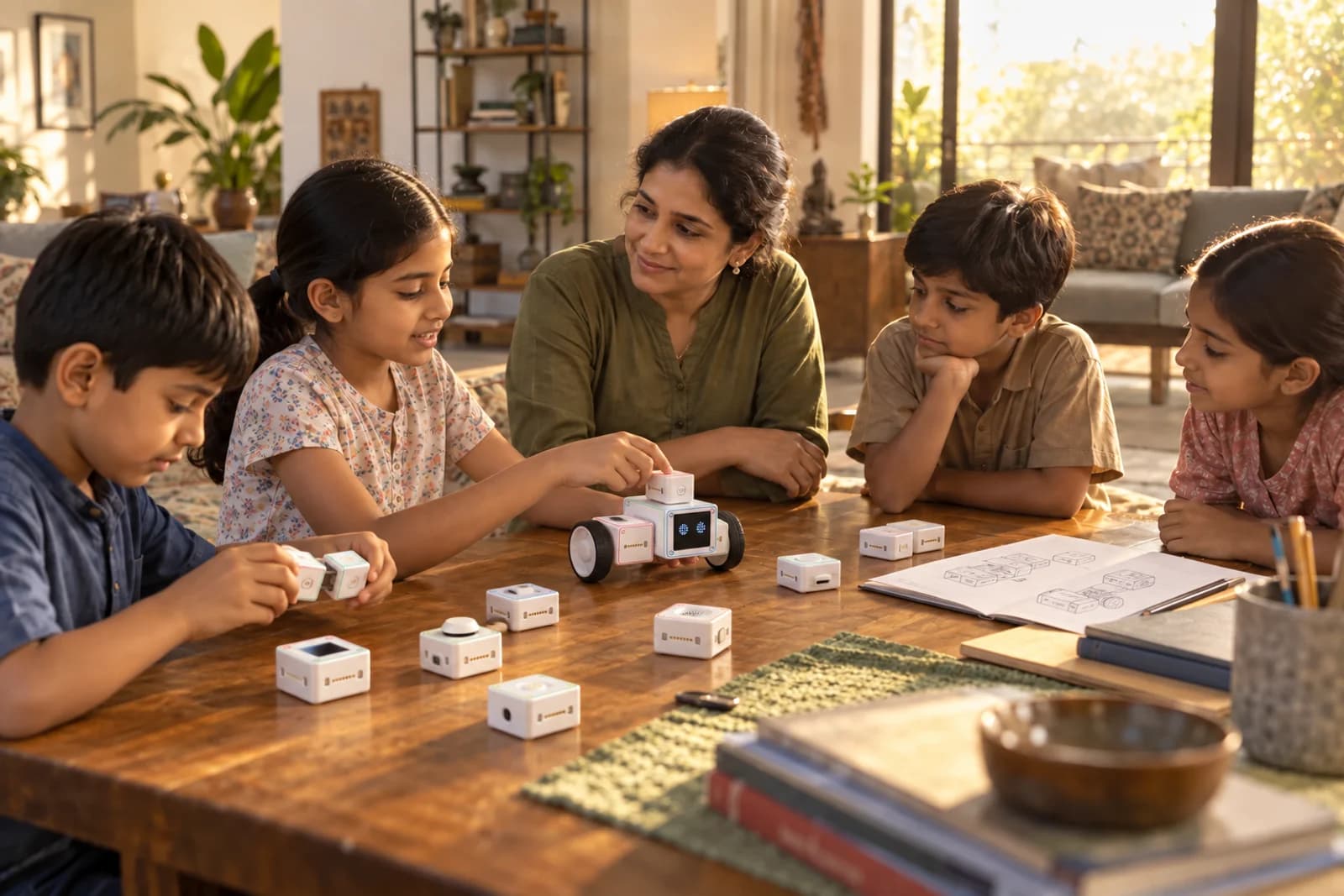
01 / The learning journey
A familiar setting, a small group and an educator who has time to listen. The aim is to help children turn what they know into what they can do—and move towards their own peak performance.
01 / Notice
02 / Explore
03 / Express
04 / Grow
02 / Inside a learning pod
The proposed pod brings one Mother-Educator and up to ten children together in a designated common room at home. Sessions are planned around local school hours, with children learning at their own stage.
Support for the child’s own CBSE, ICSE or state-board learning. Find the missing concept, work through it and build understanding—not just finish the page.
Tell a story. Explain a choice. Present an idea. Build something with a partner. Everyday activities make room for thinking, expression and empathy.
Start with physical puzzles and sequencing. Progress to coding, shared robotics and supervised AI exploration. The adult remains at the heart of the learning.
A typical session / approximately two hours
A short warm-up to see where each child is today.
Schoolwork at the child’s own level, with help where it is needed.
A shared making, reasoning or communication activity.
A closing circle: each child says what they learned.
03 / Beyond the workbook
The capability framework looks at eight areas through things children actually do. It gives the educator a next step—not a label for the child.
Hold a conversation. Ask a question. Explain an idea in your own words.
Share something with the group, then respond to their questions.
Give a reason, examine evidence and consider another point of view.
Break a problem into parts. Spot a pattern. Put steps in order.
Explore different possibilities and make something of your own.
Share responsibility, work through a disagreement and solve a problem together.
Listen to another person and try to understand how they see things.
Use tools with purpose. Check their answers. Know when to work without them.
A clearer picture of progress
The planned learning profile records observed capabilities and practical next steps, with six-month reviews. No class rank, no overall score and no comparison with another child.
04 / Growing at their own pace
Four proposed stages, from early exploration to greater independence. These age bands guide programme planning; they do not define a child’s potential.
Foundation
Stories, conversation, hands-on puzzles and early language and number work. Computational thinking begins away from screens.
Preparatory
Schoolwork support, reading, reasoning, shared activities and an introduction to block-based coding.
Middle
Deeper problem-solving, group presentations and shared physical robotics activities that connect thinking with making.
Bridge
Structured argument, collaborative projects, text-based coding and supervised exploration of AI tools.
05 / For educated women
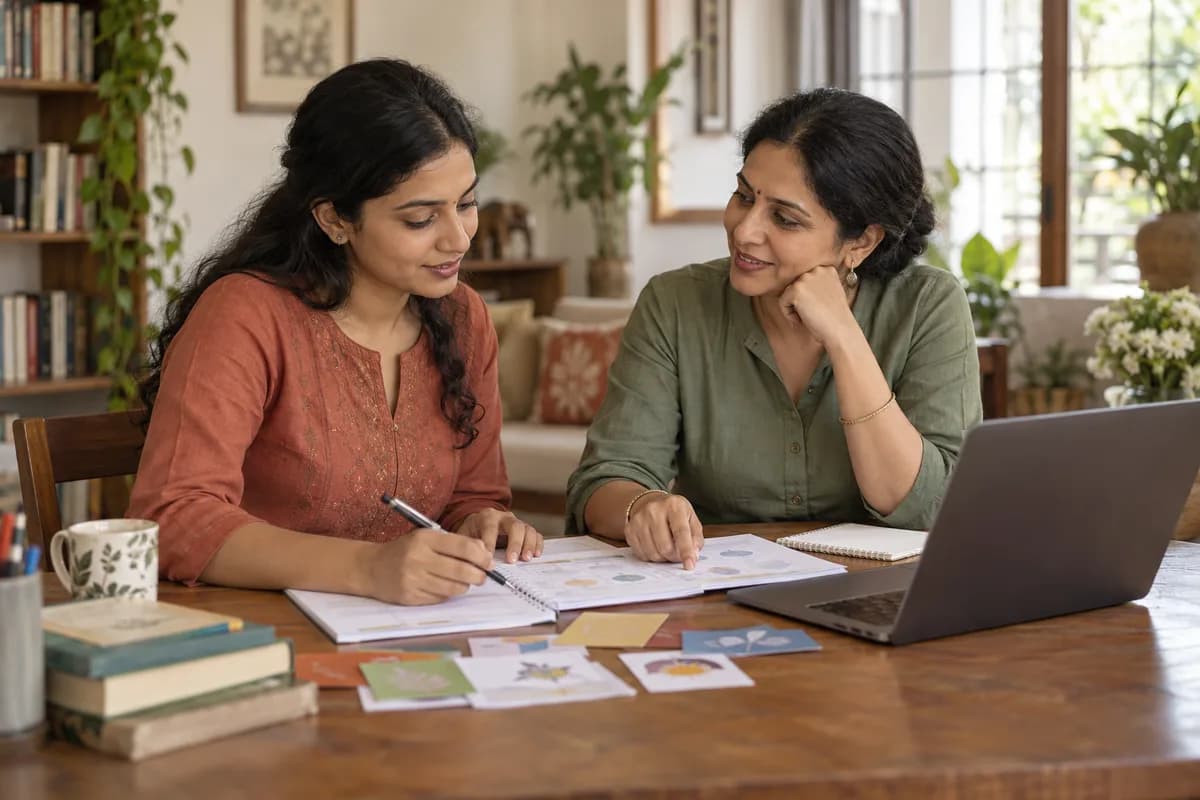
Mother Skool is designed to help educated women put their knowledge to work from home as Mother-Educators, with structured preparation and ongoing support.
Patience, reliability and a willingness to learn matter. Participation is subject to selection, home suitability and safeguarding checks; income depends on enrolment and agreed terms.
Explore becoming an educator ↗06 / Care needs a structure
The planned model pairs home-based teaching with central training, oversight and parent communication. These safeguards are part of the programme design, not a substitute for checking local arrangements before joining.
Educator and household background checks, safeguarding training and a suitable common-room learning space are planned requirements.
Session observation, mentor visits and ongoing educator development are designed to keep learning quality under review.
The planned parent platform brings attendance, progress updates and a direct concern-reporting route to NanoSkool. Recording activities requires consent.
Before you begin
A planned NanoSkool network of small, home-based learning groups led by trained Mother-Educators. It brings schoolwork support, capability-building activities and age-appropriate technology into one personal learning setting.
No. The initial programme is designed to complement a child’s existing school and syllabus. Full-time home-schooling is a possible later direction, not part of the current offer.
Children roughly aged 4–14, grouped by learning stage rather than school grade alone. The proposed model limits each pod to ten children so that attention can stay personal.
No. Conversation, printed work, physical puzzles and shared activities come first. Coding, robotics and AI are introduced progressively, with an educator present.
The plan welcomes graduate women with patience, reliability and suitable space at home. Previous teaching experience is welcome but is not the only starting point. Selection, training, practical assessment and safeguarding checks form part of the proposed pathway.
Contact NanoSkool to express interest as a parent or prospective educator. Local availability, timings, fees and final participation terms need to be confirmed before enrolment. This page is an introduction to the planned programme, not an enrolment or payment portal.
For families. For future educators.
Tell us about your child—or the learning space you hope to create. We’ll discuss the next steps and availability in your area.
Talk to NanoSkool ↗Mother Skool is in development. Programme details are subject to confirmation. Images on this page are AI-generated illustrations of the proposed experience.